

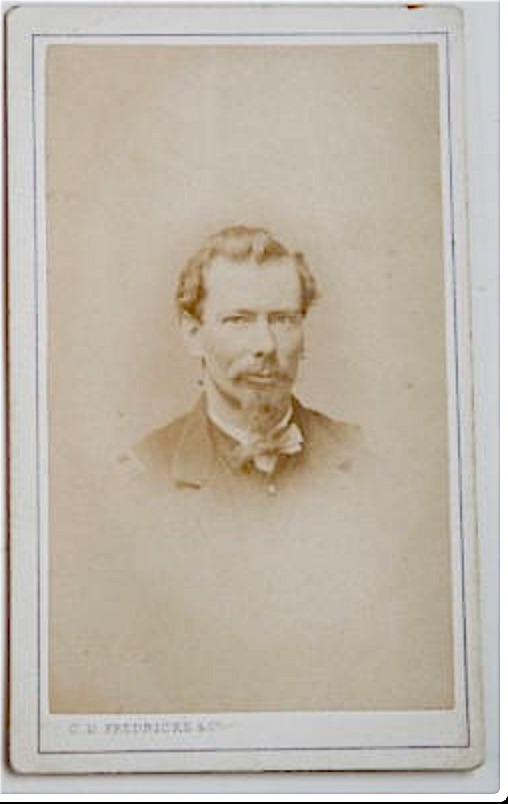
W.H. Nash, Capt. 1st U.S.S (c. 1863)
Though he only lived 43 years, William Henry Nash saw more than his share of danger and death.
Born in England, he was a gilder – a worker in gold leaf – in New York City by 1852, then 20 years old. He enlisted in that year as a Private in the 3rd United States Artillery and was assigned to Battery B. Over the next 5 years he served in California and Oregon, was promoted to First Sergeant, and saw action against Indians, where he was shot in the spine and was very lucky to survive.
He returned to his trade in New York, but at the outbreak of the Civil War in 1861 enrolled again for military service, as First Lieutenant of Colonel Hiram Berdan’s First US Sharpshooters – a volunteer unit formed of men, like Nash, who could put 10 consecutive rifle shots inside a 5 inch radius at 200 yards.
He was conspicuous for bravery and leadership in Maryland in September 1862 and in the many other engagements of the Sharpshooters to April 1864, then transferred as Captain and Assistant Inspector General to his brigade commander’s staff. Captured soon after in the Wilderness, VA, he spent most of the rest of the war in prison camps in Georgia and South Carolina.
He began a new career in 1868, joining the New York City Fire Department, was credited with numerous acts of bravery as a firefighter in saving as many as 15 lives over the next 7 years, and rose to be a Battalion Chief.
He died on 14 September 1875 when a demonstration of a new aerial ladder went terribly wrong and he and two other firemen fell nearly 100 feet to their deaths.
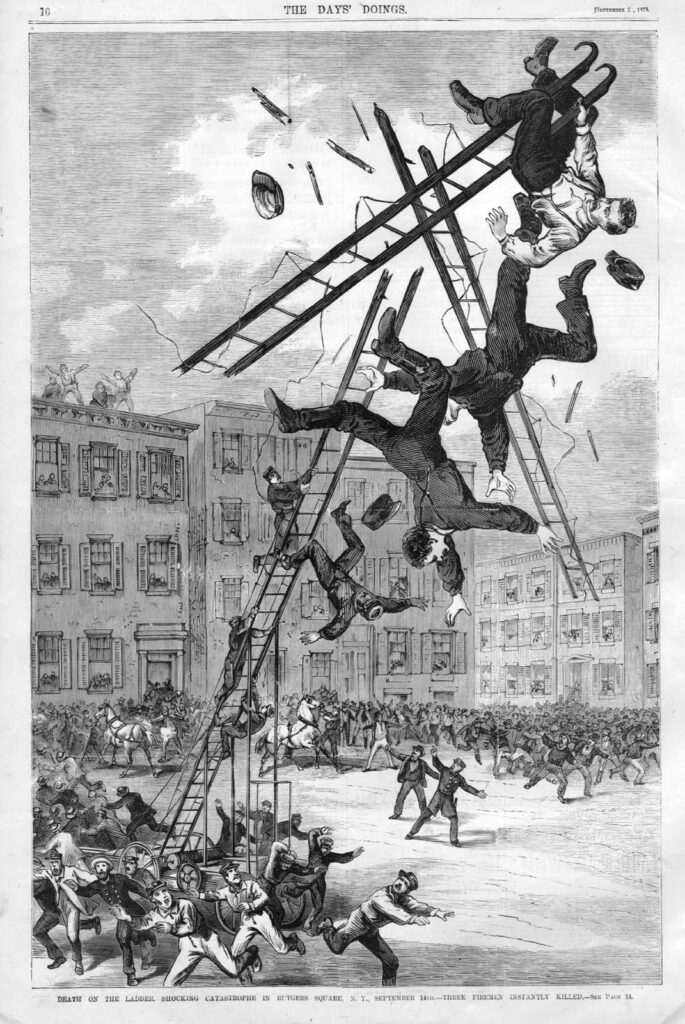
Death on the ladder. Shocking catastrophe in Rutgers Square, N.Y., September 14th – three firemen instantly killed.
This dramatic image of the event is from the (New York) The Days’ Doings of 25 September 1875 – the Doings was a sensationalist paper owned by Frank Leslie, more famous for his less flamboyant Illustrated Newspaper. That’s Chief Nash at he top of the ladder – he was apparently known by his considerable mustache, as seen in this contemporary photograph of him.
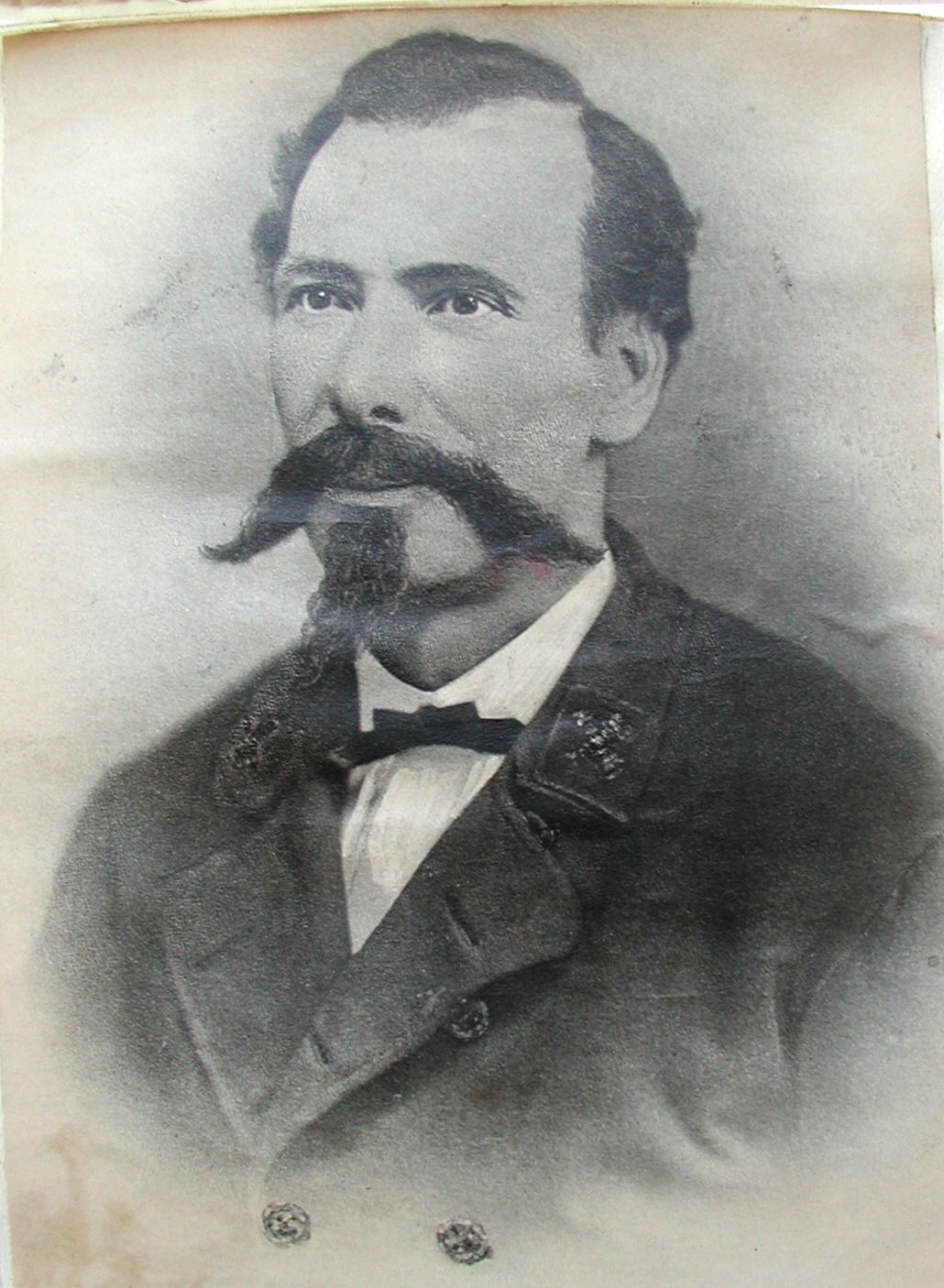
Chief Nash c. 1874
Also on 25 September the New York Daily Graphic published another, only slightly less dramatic view of the scene:
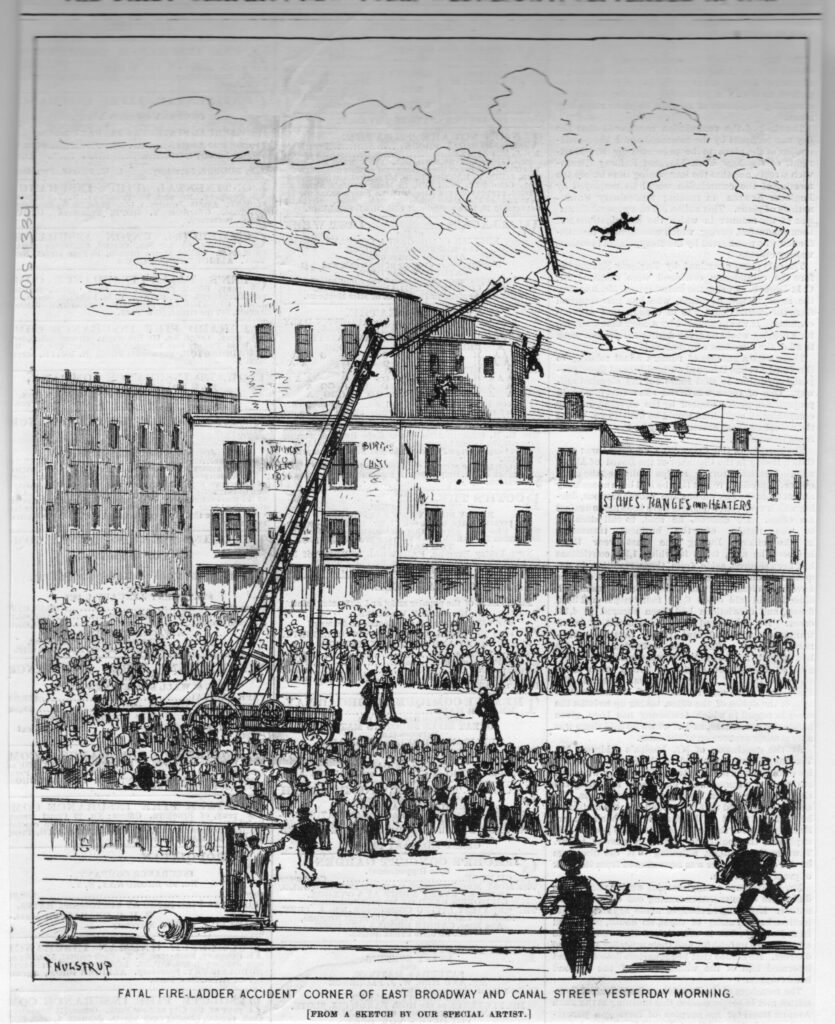
Fatal fire-ladder accident corner of East Broadway and Canal Street yesterday morning.
The artist of this one is identified as Thulstrup. He was Thure de Thulstrup, who has another connection for students of the Battle of Antietam. He’s also the creator of this iconic picture:
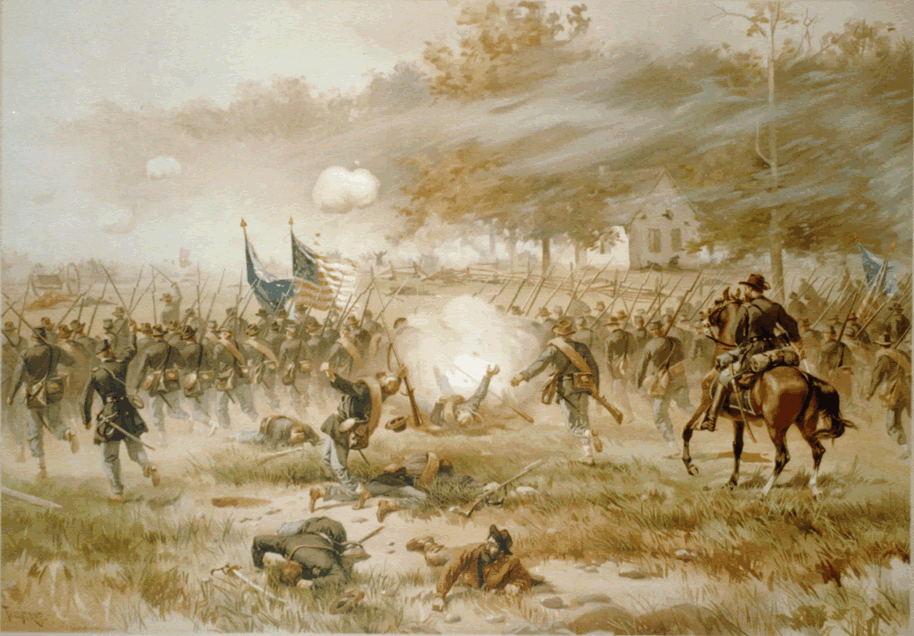
Antietam (Thulstrup, 1887)
Much more about that in an earlier post here on behindAotW.
Notes
Thanks to New York City Fire Department (NYFD) historian and author Gary Urbanowicz for kindly supplying (and sharing online) the above pages from The Days’ Doings and the Daily Graphic, both of 25 September 1875, and that photograph of Chief Nash. Gary shares stories of NYFD history monthly on his podcast Throwback FDNY and is the former Executive Director and now staff historian of the New York City Fire Museum.
William H Nash is buried, with his wife Harriet, in Green-Wood in Brooklyn. Cemetery historian Jeff Richman posted a fine piece about his research into Nash and includes considerably more information about that fatal day. Jeff is also my source for the wartime CDV of Captain Nash seen at the top of this page.
Thure de Thulstrup (born Bror Thure Thulstrup, 1848-1930), by the way, is also buried in Green-Wood Cemetery.
Leave a Reply