First Sergeant W.H. Andrews at Sharpsburg
30 July 2025
Our rations were out Sunday. Monday and Tuesday we had nothing but water …
Just about sunset, a cow came feeding in front of our lines. Gen. [G.T.] Anderson ordered her killed and divided among the brigade. Soon had my little piece broiled over the coals, and ate it with the blood running out, without either salt or bread. Just whetted my appetite with nothing more to be had. How long, oh how long before we get something to eat? While we are all so hungry you don’t hear any complaints among the men, all knowing that rations are not to be had, being so far from our line of communication, all of our supplies coming from Virginia. No foraging allowed by Gen. Lee on the enemy’s country. What a contrast between our invasion and that of the enemy, who take everything as they go.
– William H Andrews, First Sergeant, Company M, First Georgia Infantry (Regulars) at Sharpsburg on Tuesday, 16 September 1862
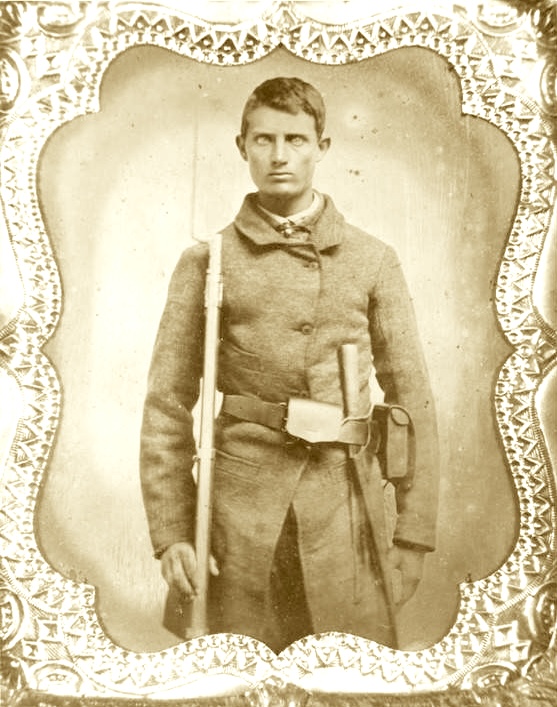
Here’s Sergeant Andrews many years later, probably as he looked as he wrote his memoirs, source of the quote above.

Notes
Thanks to Kevin Whitehead for sharing the photo of his 3x great-grandfather and for the lead to William’s memoirs. They were published in Footprints of a Regiment: a Recollection of the 1st Georgia Regulars, 1861-1865 (1992), edits and notes by Richard M. McMurry.
An English saddle in wartime Richmond
28 July 2025
Behold a receipt for an English Saddle & Equipments purchased by Sharpsburg veteran Major, soon to be Lieutenant Colonel Henry A Rogers of the 13th North Carolina Infantry in Richmond, VA in July 1863. It was $125.

For reference, due to wartime shortages and inflation, bacon cost $1.25/pound and flour was $28/barrel in Richmond, four times their pre-war prices. And his pay was $130/month for May and June 1863, while still a Captain. It would rise to $150/month as a Major and $170 as a Lieutenant Colonel.
Rogers’ saddle was probably made in the Ordnance Harness Shops at Clarksville, VA, but may instead have literally been English-made and came through the blockade from England.
The W.S. Downer seen on the receipt is Major William S Downer, Superintendent of Armories at the Richmond Arsenal, the organization responsible, among other things, for issuing horse equipment of all kinds. M S K = Military Storekeeper. Downer, by the way, had been a clerk at the US Army’s arsenal at Harpers Ferry, VA in 1860.
Here’s Henry Rogers at about the time of his purchase, in a portrait of unknown provenance from the Chancellorsville Vistor Center.

Notes
The receipt above is among Rogers’ Compiled Service Records, now in the National Archives. I got my copy from fold3, a subscription service.
The 13th Alabama Infantry in Maryland, in detail
19 July 2025
Private “Mage” Allen, Company H [Alabama Archives]
I’ve just completed a thorough scrub through the military and other records of the men of the 13th Alabama Infantry regiment, and extracted service and personal details for those who were present on the Maryland Campaign of September 1862.
Following is some interesting information that comes from that collection of data.
 [
[