James Madison Cutts of Washington, DC
17 November 2006
I like to think I would have got to him eventually, but an email query from distant descendent Gene Siscoe brought Captain J.M. Cutts, Jr. (1837-1903) to my attention yesterday. The question concerned his actions on General Burnside’s staff at Antietam in 1862. Sadly, I can’t help much there, Cutts is only listed as present in Burnside’s after-action report.
But the Cutts story does have tendrils reaching interesting spots and connects with some names you’ll certainly know.
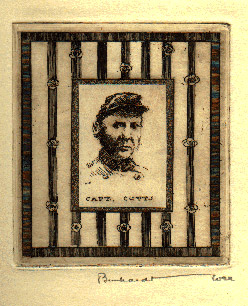
etching by B. Wall from A Lincoln Reprimand (1950)
Cutts served for about 6 weeks in mid-1861 as Private in the 1st Rhode Island Volunteers, and then accepted an appointment as Captain in the new 11th United States Infantry. He was then about 24 years old. By Antietam he was an Aide-de-Camp to Major General Ambrose Burnside, under whom he had served in the 1st Rhode Island. Because of his apparent lack of previous military experience, I’d guess his US Army commission and staff postion were based on family connections.
From the bayou to Gettysburg: V.J. St. Martin
5 November 2006
Mr Erik Himmel of Schriever, Louisiana has kindly sent me a pile of information about his great-great-grandfather, the late Captain Victor Joseph St. Martin, for use in a biographical sketch on Antietam on the Web. Captain St. Martin was wounded and captured in action at Sharpsburg while commanding Company K of the 8th Louisiana Volunteer Infantry.
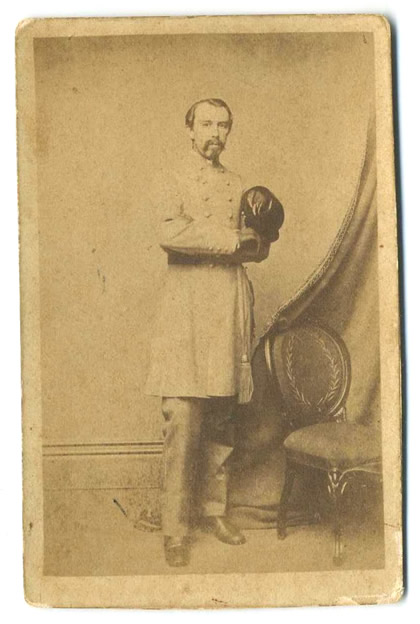
V. J. St. Martin (CDV courtesy E. Himmel)
St. Martin returned to his Regiment, but was later killed on Cemetery Hill Ridge at Gettysburg.
Rufus Pettit: solid artilleryman, vicious jailkeeper
28 October 2006
I should avoid online Civil War discussion groups. They just give me more research threads to pull. Like I need more.
I’d been following a discussion about artillery over on the American Civil War Message Board. I was thinking I could contribute on a question about unit organization, which referred to Battery B, 1st New York Light Artillery, as an example.

R.D. Pettit, c. 1861-65
First, I looked to see what that battery was doing at Antietam, and noticed the commander was Captain Rufus Petit (above). I didn’t have much on the Captain, but did know that he had been dismissed from the service in 1865. I wondered why. He seemed to have served honorably on the Peninsula and at Antietam. “Dismissed” is usually bad.
 [
[