Category: quickPost/Pix
-

Officers of the 4th Georgia Infantry (1863)
Captain Eugene A. Hawkins, Colonel William H. Willis, and Captain Howard Tinsley of 4th Georgia Infantry Regiment in uniform: a photograph in the Liljenquist Family Collection of Civil War Photographs at the Library of Congress. Hawkins was First Lieutenant of Company H in Maryland in 1862. Willis was then Captain of Company I and commanded…
-

Mr & Mrs Richard Henry Rush (1857)
Portrait paintings of Richard Henry Rush (1825 – 1893) and his wife Susan Bowdoin Yerby (1829-1889) done about 2 years after their marriage in Baltimore. The Rush family had been prominent in Philadelphia since before the Revolution. Richard was Colonel of his Lancers – the 6th Pennsylvania Cavalry – from 1861 to 1864, and he…
-

Officers of the Artillery Brigade, 3d Corps, and Alfred R. Waud, artist correspondent (1863)
James Gardner took this photograph at Brandy Station, VA in December 1863. The men in it are identified (left to right) as: Captain Samuel A McClellan(d) – Battery G, First New York Light, 1861-65, formerly 2nd Lieutenant of Busteed’s Chicago Battery. He was with the 2nd Corps in Washington DC in September 1862 and not…
-

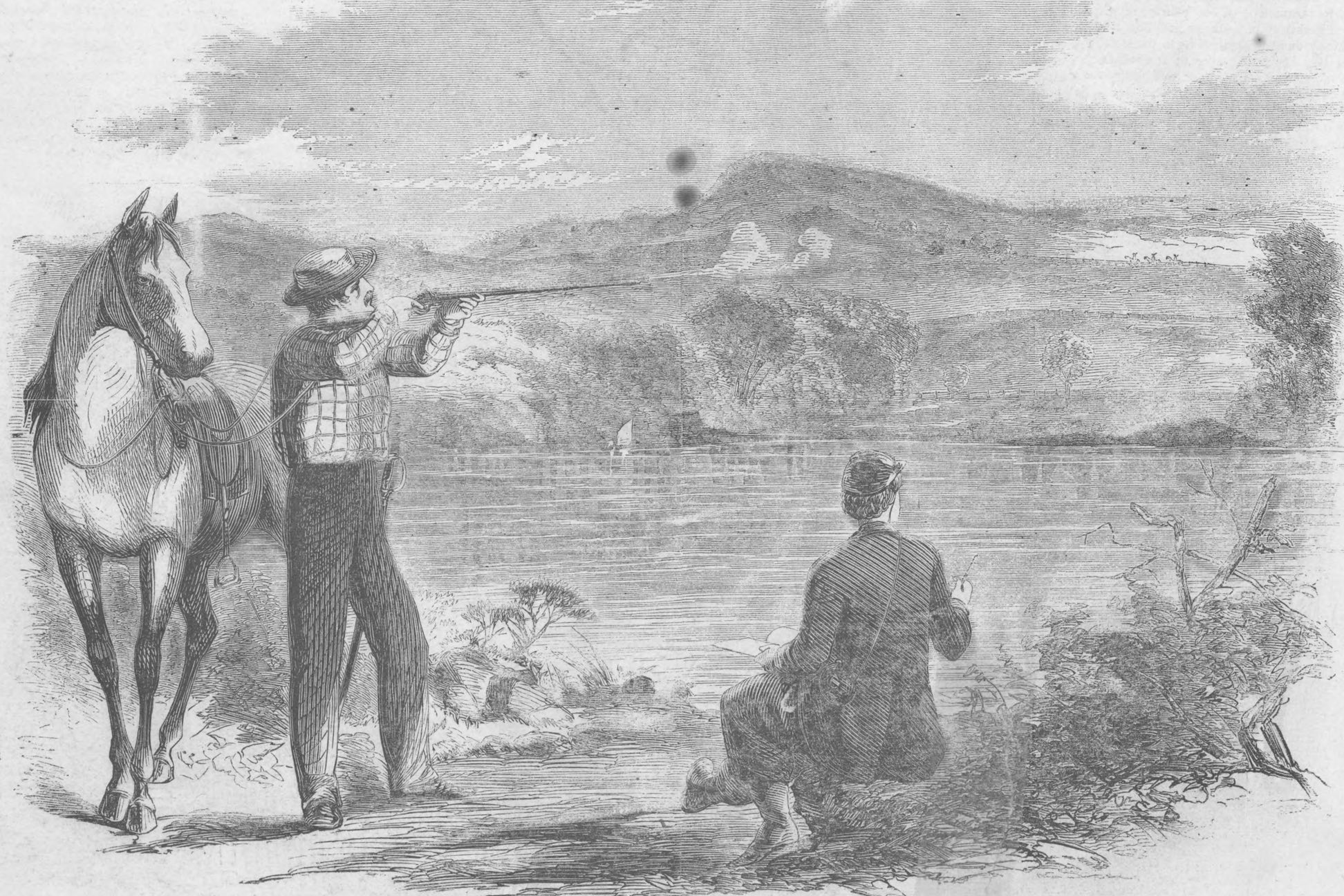
Major Knipe Winging a Secessionist (1861)
From Harper’s Weekly, 20 July 1861 Our special war correspondent and artist of General Patterson’s Division, now in Virginia, furnishes us this week with a sketch of an exciting incident which lately occurred at Williamsport…. Major [Joseph Farmer] Knipe, of General Williams’s staff, was one morning riding leisurely along the already historic Potomac banks, accompanied…
-

The overworked brain of Emory Upton
Emory Upton graduated 8th in the May class of 1861 from the US Military Academy at West Point and was immediately at war. And he was very good at it. For the whole of his 20 year military career thereafter he was recognized as a superior combat leader, tactician, and military thinker, and was rewarded…
-

Who commanded the 32nd New York Infantry at Antietam?
Another in a series. Francis Effingham Pinto was in the grain storage and transport business in Brooklyn before and after the Civil War. He had been successful as a merchant since about 1850, when he decided to sell supplies to ’49ers in California rather than mining gold himself. He was appointed Lieutenant Colonel of the…