Charles Jackson’s left-hand penmanship
27 May 2024
Charles Jackson, a Private in the 8th Connecticut Infantry was not quite 18 years old when he was shot through the right wrist at Antietam on 17 September 1862 and captured there at the farthest advance of the Union Ninth Corps that day, nearly to the town of Sharpsburg.
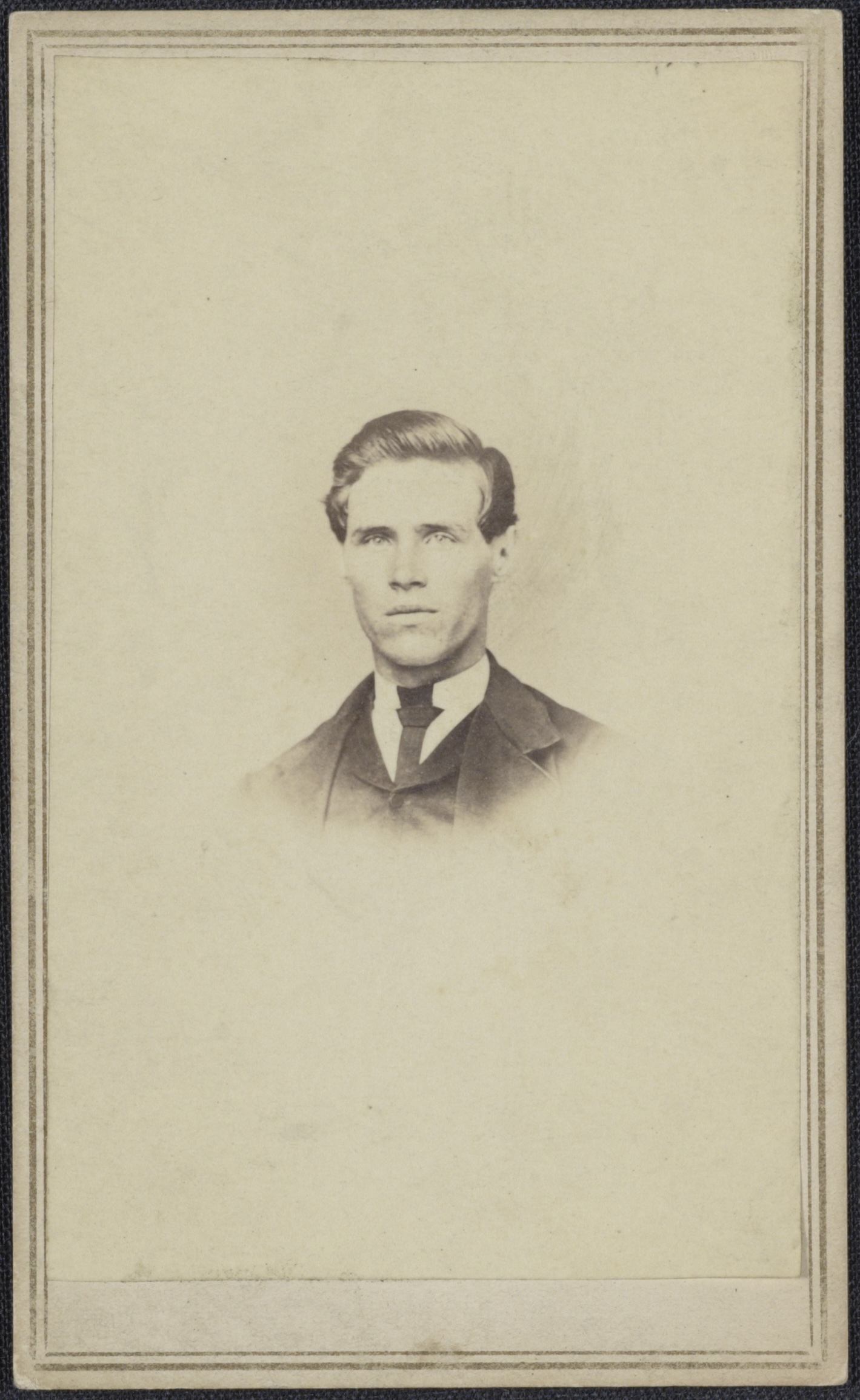
[Charles Jackson, c. 1865]
The next day his hand was amputated at the forearm, probably by a Confederate surgeon. Two days later, left behind near the battlefield when the Confederate Army retired to Virginia, he was “recaptured” and put in the care of his own Army. He was sent home in February 1863 but returned that fall and served two more years, in the Veteran Reserve Corps, to October 1865.
Which is probably when he saw an announcement like this one:
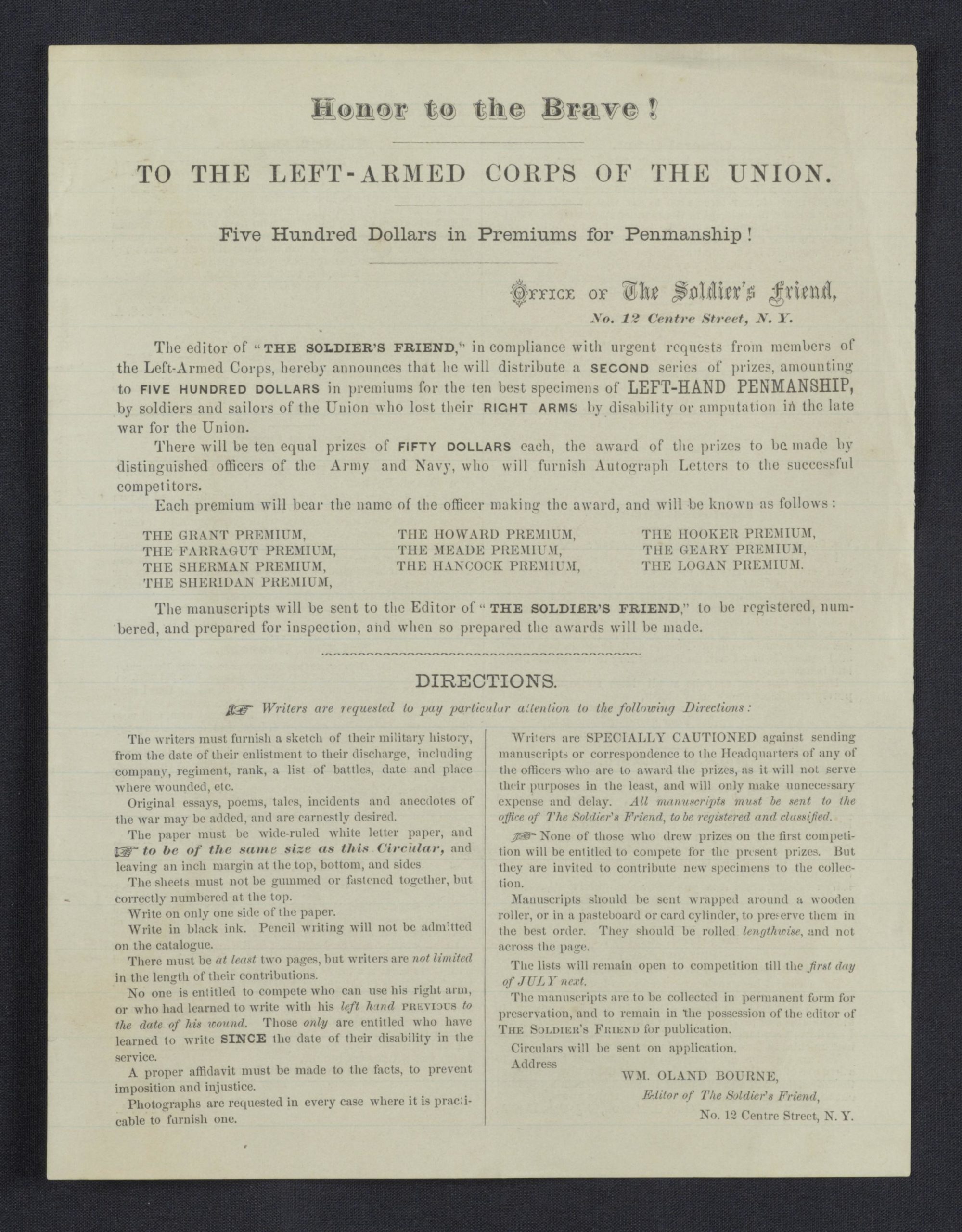
On Christmas Day 1865 he wrote the organizer of the event, the Rev. W. Oland Bourne, describing his war experience, his wounding at Antietam, and his life at that moment and enclosing a sample of his best handwriting as his entry in the contest. He was the 221st of some 270 men to enter.
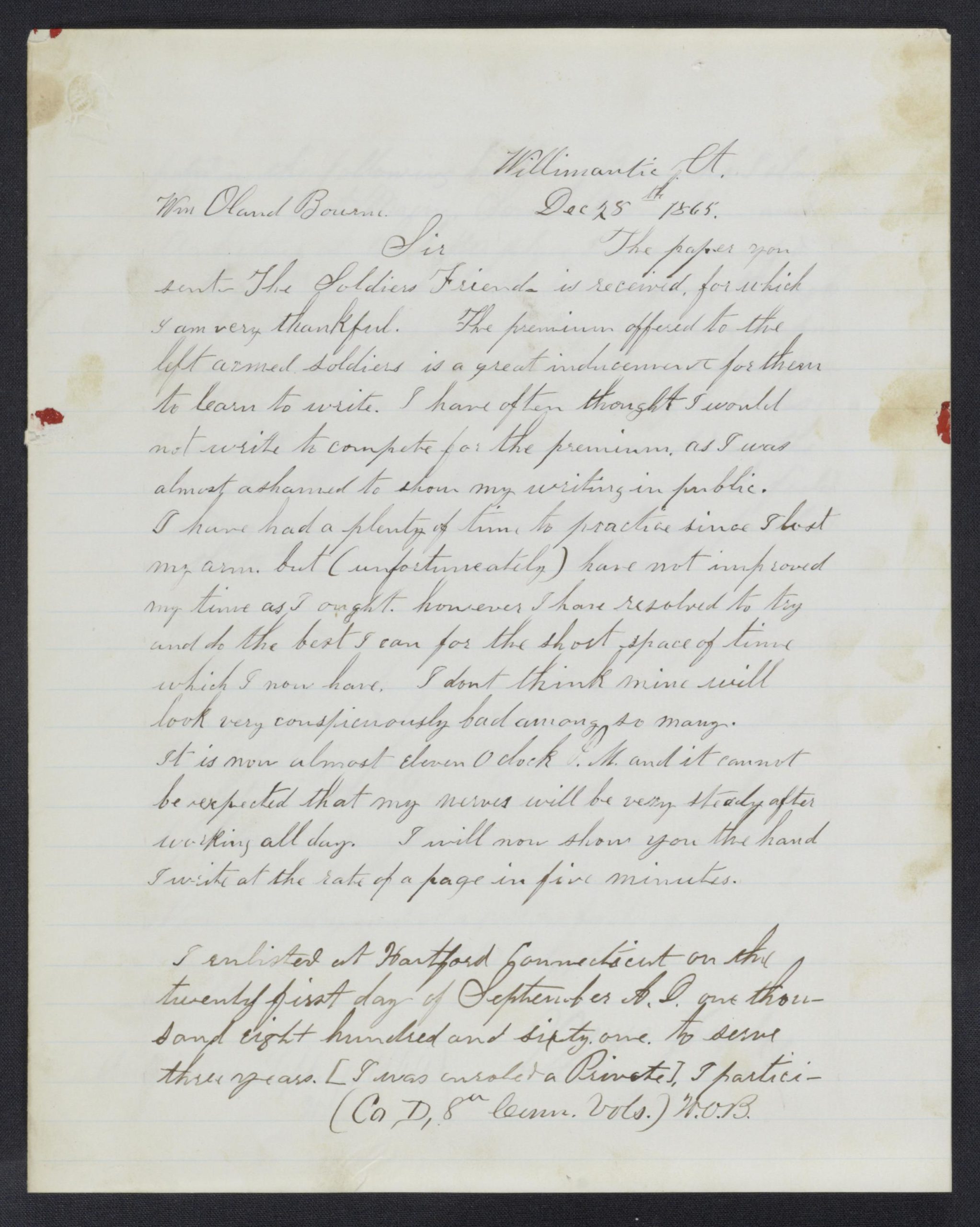
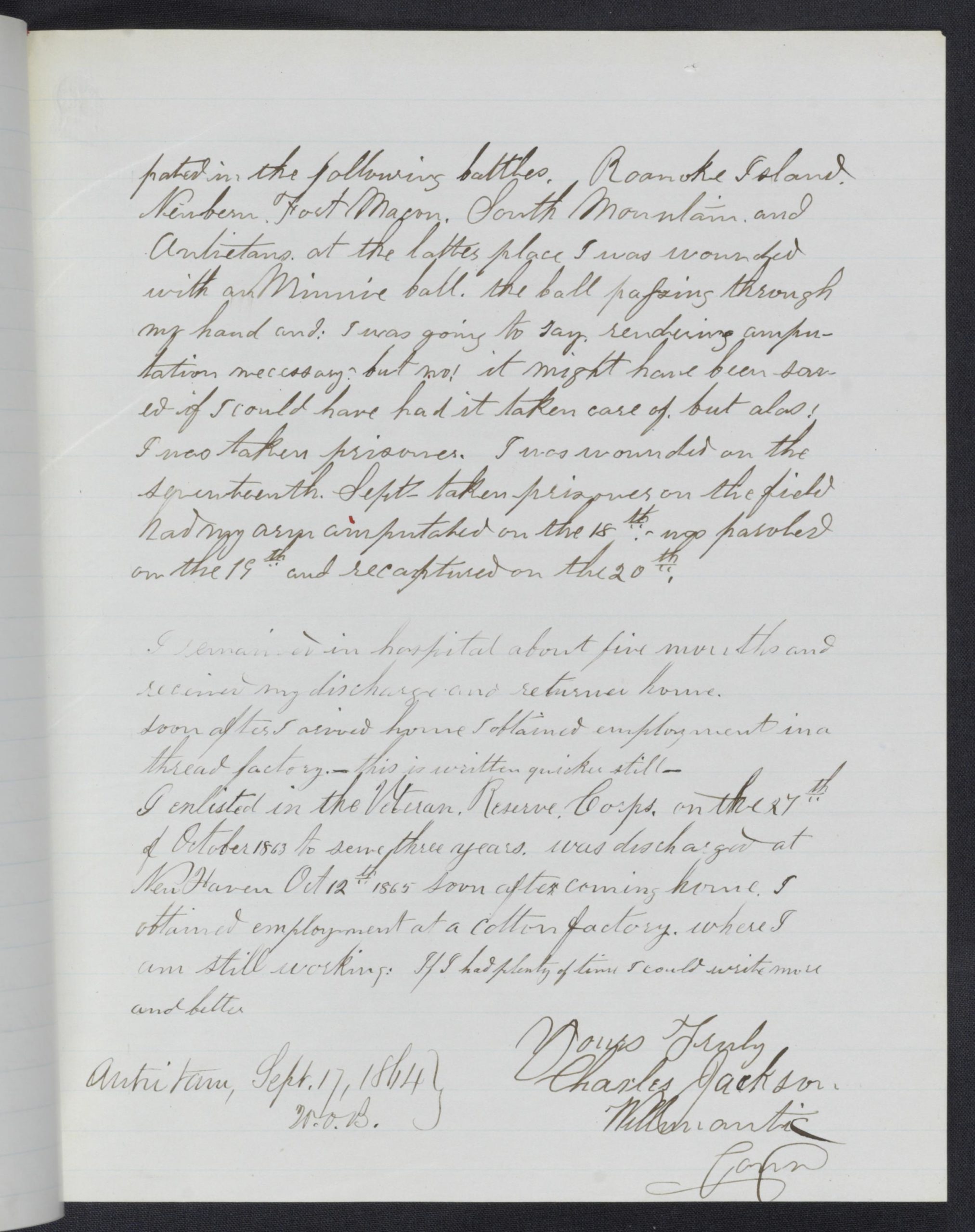
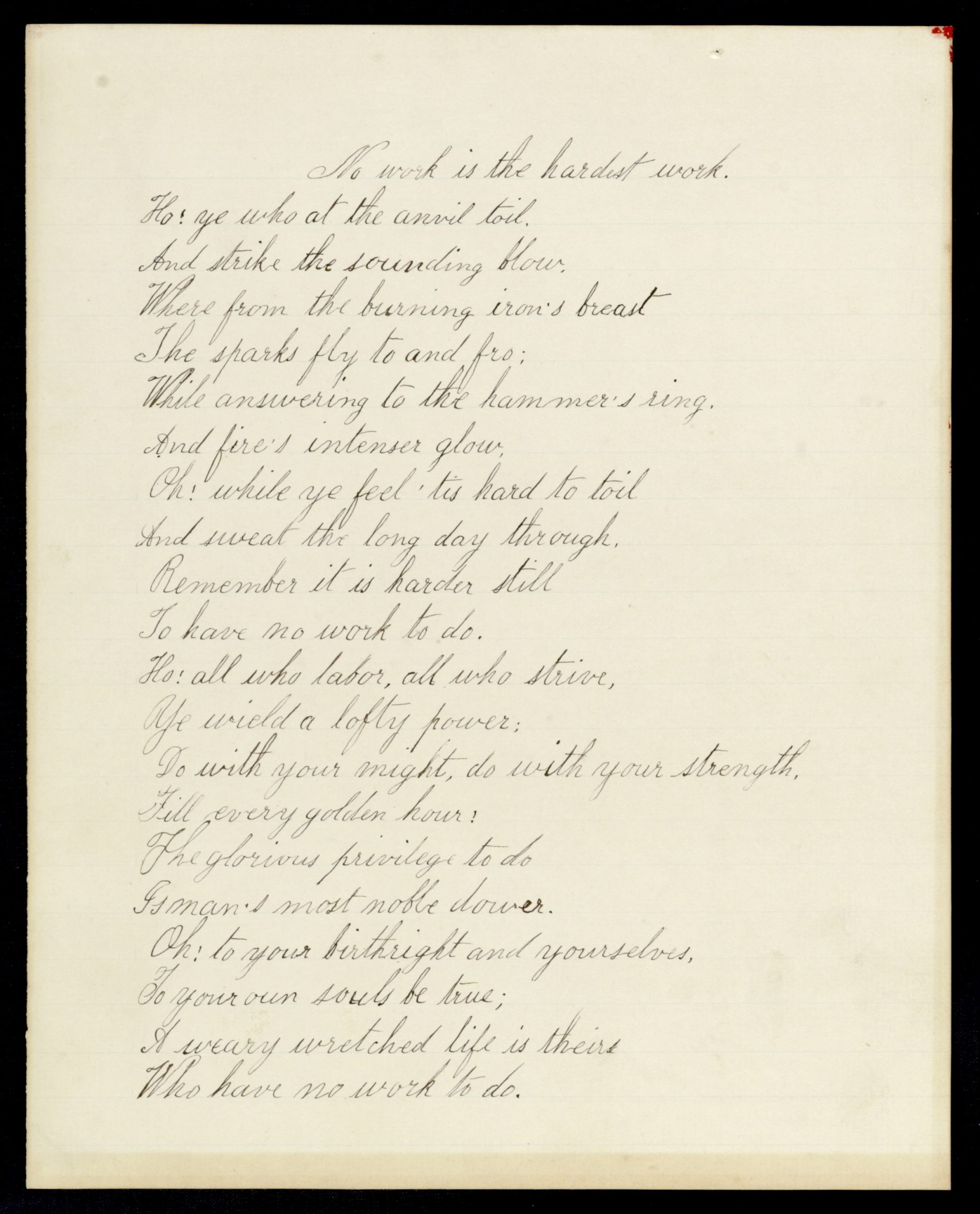
He did not win any prizes, but certainly made a respectable showing.
Just 21 years old at the time of the contest, Charles went on to a long and fruitful life, and was a letter carrier in Hartford for almost 50 years.
Notes
See much more about the penmanship contest and it’s sponsor, William Oland Bourne, in an exhaustive exhibit at the Library of Congress, source of the photograph and documents here; transcriptions below.
At least 13 other amputee survivors of the Maryland Campaign of 1862 also entered the 1865-66 contest (Series 1) or the one that followed in 1867 (Series 2); viz:
Capt. Charles A. Edmonds, Co. H, 7th Michigan Infantry, South Mountain, MD (9/14/1862); Ser. 1, #51 …
Hospital lists after Antietam
4 February 2024

On 12 October 1862 the New York Times printed lists of soldiers who died at several field hospitals near the battlefield in the 2 weeks immediately after Antietam. They contain some excellent detail I’ve not seen elsewhere, and I’m saving them here [PDF] for current and future reference.
Drs. Katherine Francis Beatty and George T. Cook
9 September 2022
George Tottingham Cook was seriously wounded at Antietam in September 1862 while First Sergeant of Company C, 21st New York Infantry, and was 2nd Lieutenant of his Company at muster-out in May 1863.
His wound troubled him for the rest of his life.
Disabled for the field but still eager to serve, he was a Lieutenant in the Veteran Reserve Corps (VRC) from 1863 to 1867. Here’s his impressive commission in the VRC signed by President Lincoln and Secretary of War Stanton. It was offered for sale by the Abraham Lincoln Book Shop in Chicago.
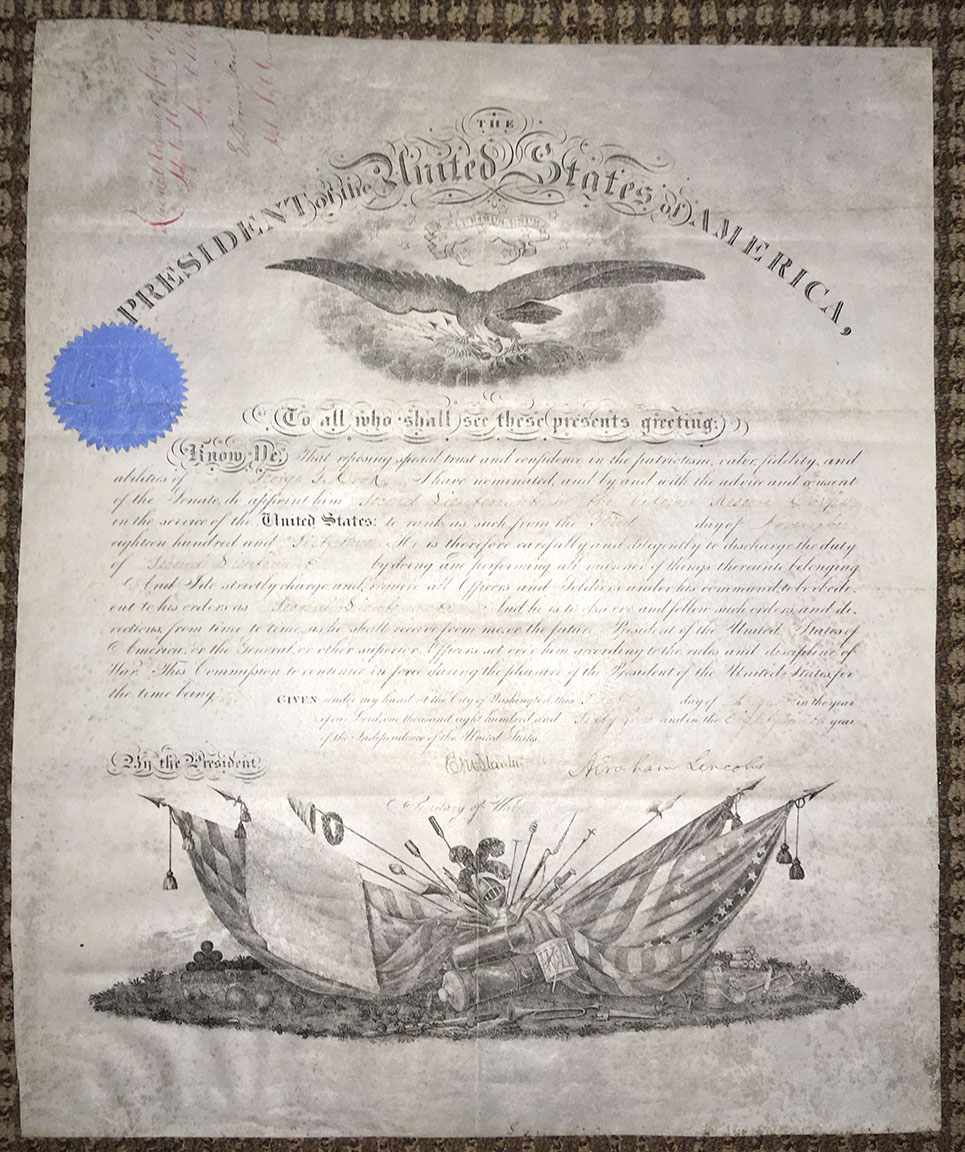
He continued in the Army as a Lieutenant in the 6th US Infantry after the War, but resigned, probably for health reasons in 1870.
After a stint in business in his native Buffalo, he got a Government job in Washington, DC in 1881, and from 1882-85 went to medical school in the evenings at Howard University. He probably met his wife Kate there – she graduated from Howard with an MD in 1884, he in 1885 – she almost 20 years his junior.
Here are their capsule biographies and a view of the medical lecture hall from Howard University Medical Department, Washington, DC: A Historical, Biographical, and Statistical Souvenir (1900). It’s online from Howard.


George died at age 50 in February 1891 and an Act of Congress (HR 13971) of March 1891 granted a veteran’s pension to Kate and their daughter Ethel Beatty Cook (1888-1980), citing his Antietam wound as a cause of his death.
Kate lived with Ethel in Washington, DC to her death there in 1928 – making a living as a clerk in the War Department. All three Cooks were buried in Arlington National Cemetery.
 [
[