Drs. Katherine Francis Beatty and George T. Cook
9 September 2022
George Tottingham Cook was seriously wounded at Antietam in September 1862 while First Sergeant of Company C, 21st New York Infantry, and was 2nd Lieutenant of his Company at muster-out in May 1863.
His wound troubled him for the rest of his life.
Disabled for the field but still eager to serve, he was a Lieutenant in the Veteran Reserve Corps (VRC) from 1863 to 1867. Here’s his impressive commission in the VRC signed by President Lincoln and Secretary of War Stanton. It was offered for sale by the Abraham Lincoln Book Shop in Chicago.
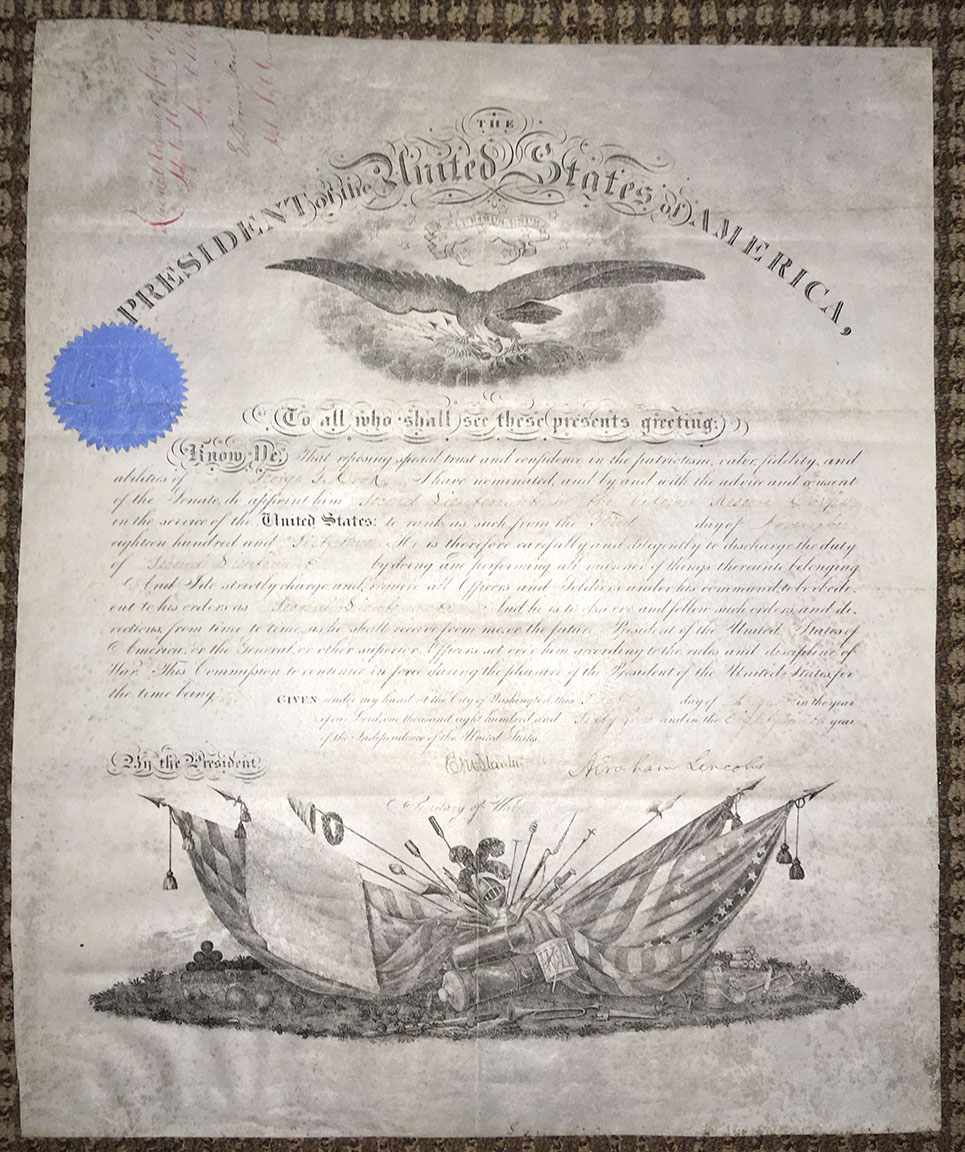
He continued in the Army as a Lieutenant in the 6th US Infantry after the War, but resigned, probably for health reasons in 1870.
After a stint in business in his native Buffalo, he got a Government job in Washington, DC in 1881, and from 1882-85 went to medical school in the evenings at Howard University. He probably met his wife Kate there – she graduated from Howard with an MD in 1884, he in 1885 – she almost 20 years his junior.
Here are their capsule biographies and a view of the medical lecture hall from Howard University Medical Department, Washington, DC: A Historical, Biographical, and Statistical Souvenir (1900). It’s online from Howard.


George died at age 50 in February 1891 and an Act of Congress (HR 13971) of March 1891 granted a veteran’s pension to Kate and their daughter Ethel Beatty Cook (1888-1980), citing his Antietam wound as a cause of his death.
Kate lived with Ethel in Washington, DC to her death there in 1928 – making a living as a clerk in the War Department. All three Cooks were buried in Arlington National Cemetery.
Battery B, 4th US Artillery in July 1860
10 March 2022
In 1860, the companies [of the 4th United States Artillery] in Utah were kept busy protecting the parties of emigrants going West, and keeping open the mail routes. Light Battery B, operating as cavalry, marched during that summer 2000 miles over a barren and desert country, and though the Indians were continually hostile, the roads were kept open. The battery had a successful fight against 200 Indians at Eagan’s Canyon, August 11, 1860, losing three men wounded (one mortally).
From May to October 1860 Battery B was based at the small Pony Express station located at Station Spring at the southern end of Ruby Valley in western Utah Territory (now Nevada). 32 year old First Lieutenant D.D. (Delavan Duane) Perkins, USMA ’49 was in command; Lieutenant Stephen H Weed USMA ’54 and Surgeon Charles Brewer (Assistant Surgeon CSA 1861-65) were the other officers.
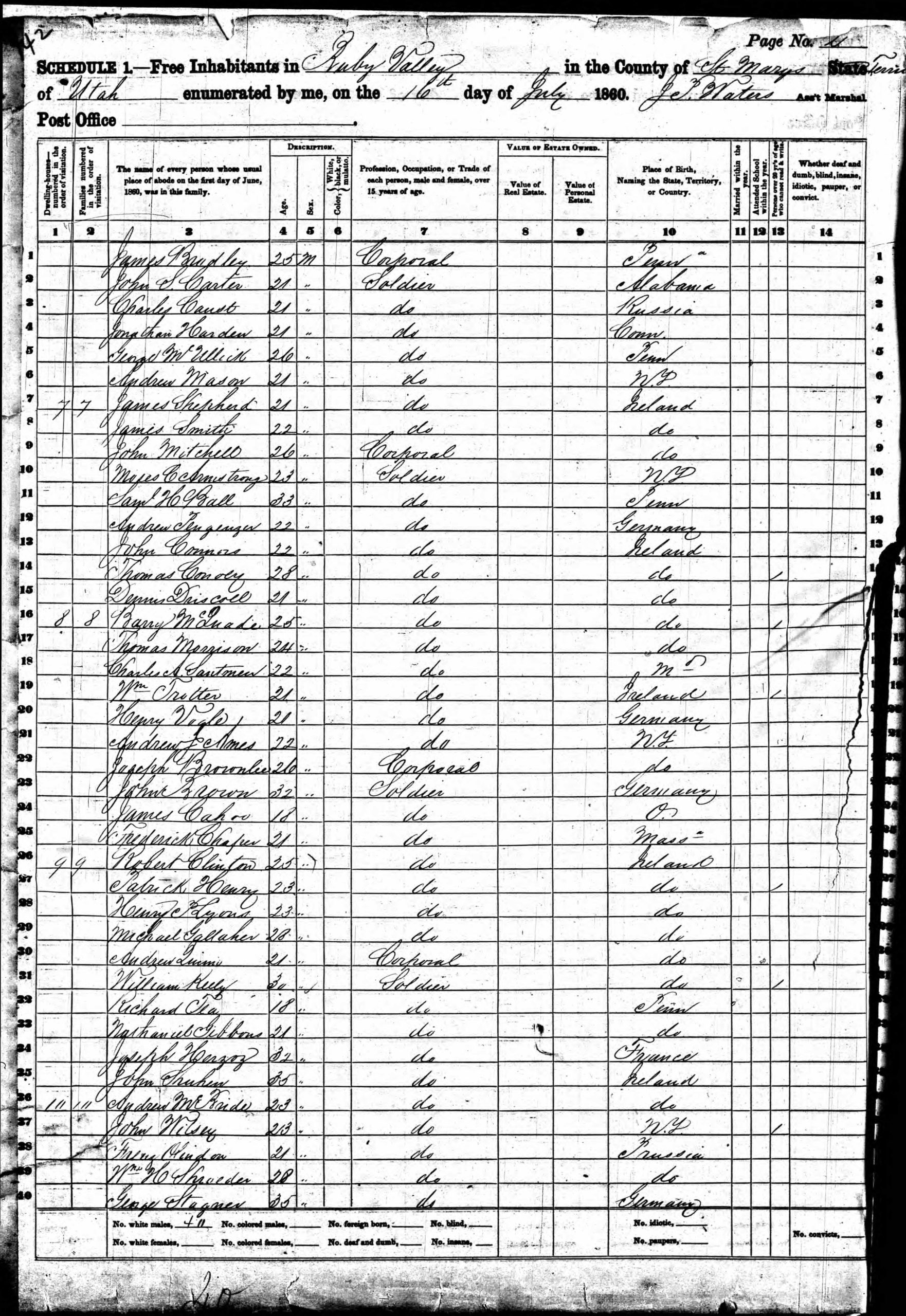
On 15 and 16 July 1860 US Census enumerator J.P. Waters identified 105 Americans there, but did not include the band of Shoshone who lived nearby. His three page [ page 1 | page 2 | page 3 ] listing of the residents is a great reference for students of the Battery.

Among the 70 soldiers listed in Ruby Valley that summer at least 17 were also in action with Battery B just over two years later at Antietam, including then-Sergeant James Stewart, who commanded the Battery at Antietam after Captain Campbell was wounded, and Private Richard L Tea, who was slightly wounded at Antietam, was awarded the Medal of Honor in 1876 for action against the Cheyenne in Kansas the year before, and retired from the Army in 1888 after 30 years in uniform.
Others of the Battery in that 1860 Census list known to be at Antietam in 1862:
William West (WIA Antietam)
John Mitchell
Andrew J Ames (WIA Antietam)
Joseph Brownlee (WIA Antietam)
John Brown (KIA Antietam)
James Cahoo
Frederick A Chapin
Henry P Lyons (KIA Antietam)
William Kelly
Joseph Herzog (MWIA Antietam)
Andrew McBride
John Wilsee/Wilsey (WIA Antietam)
Robert Moore (WIA Antietam)
William Kelly
William Moffitt (WIA Antietam)
_______________
The quote at the top is from the US Army history of the 4th Regiment of Artillery, online thanks to the Center of Military History.
The census pages are from 1860 United States Federal Census, Population, Schedule 1. NARA microfilm publication M653 (1,438 rolls). Washington, D.C.: National Archives and Records Administration. The Ruby Valley, St. Mary’s, Utah Territory set are on roll M653_1314, Pages 1-3. I found these page images online thanks to FamilySearch.
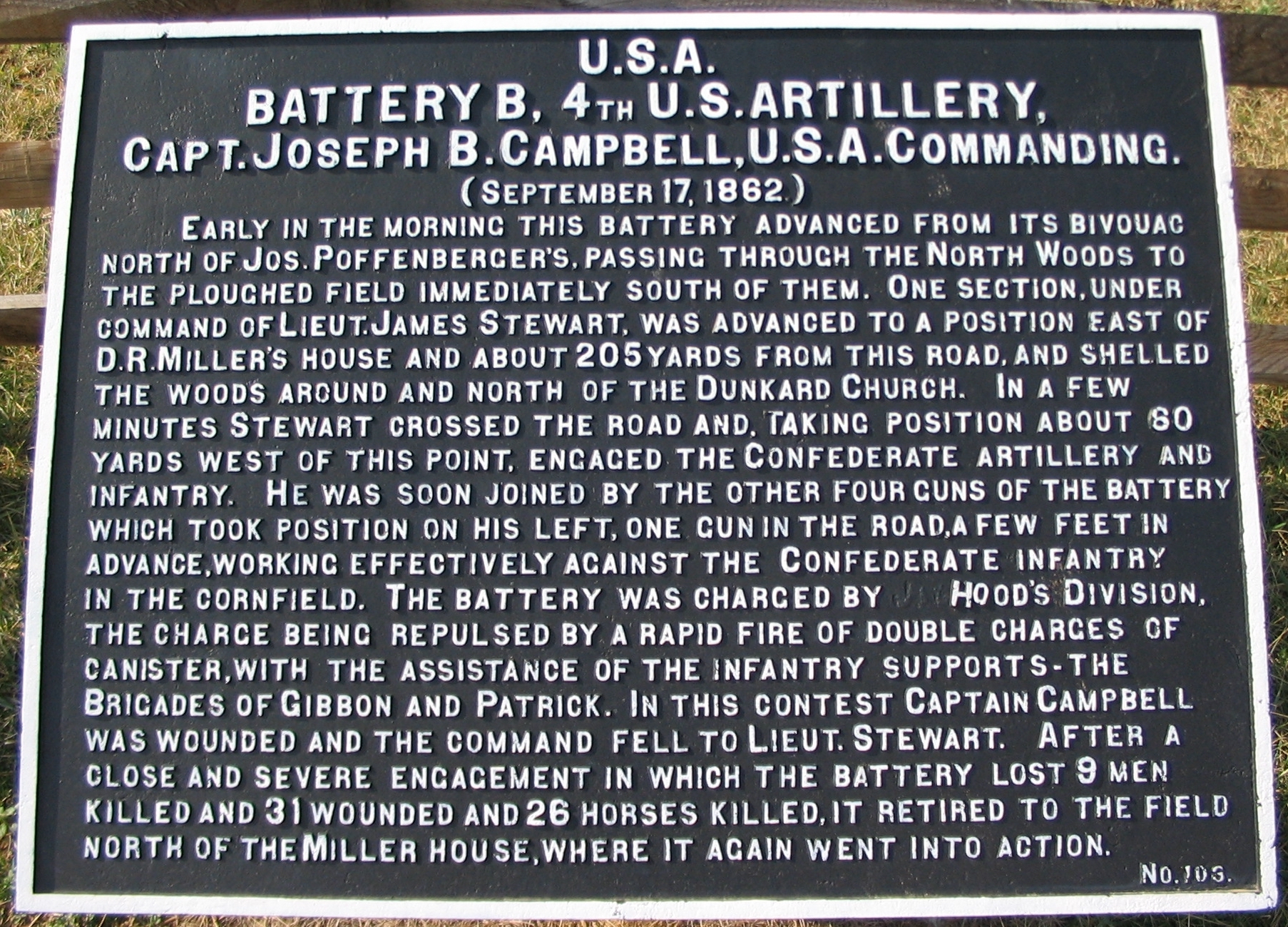
The photograph of the Battery’s battlefield tablet at Antietam was taken by Craig Swain for the HMDB.
Old Man Guest
21 February 2022
Benjamin Franklin Guest was at least 55 years old when he was killed in the battle at Sharpsburg in September 1862; a Private in Company F, 53rd Georgia Infantry.
His is indeed a hard-luck story.
Family history, supported by the US Census, says he lost his Madison County, GA farm and his family due to his drinking, and by 1860 was living alone, an overseer on a farm in Griffin, Spalding County, GA. In May 1862 he signed-up as a substitute for one R.A. McDonald (possibly Robert Alexander McDonald, 1831-1904) of Company F.
The family story says he was killed by a “sniper” on 16 September at Sharpsburg, which is somewhat unlikely, as the 53rd Georgia and the rest of the Brigade arrived at Sharpsburg from Harpers Ferry at sunrise on the 17th. His very brief military record says he was killed on 17 September.

I don’t have a birth year for every soldier killed at Sharpsburg, but among those I do have, Guest is the 2nd oldest. The oldest being Private Adam Burkel of the 11th Pennsylvania Infantry – who was about 57 years old at Antietam.
———————–
The photograph of Semmes’ Brigade’s battlefield tablet was taken by Craig Swain for the Historical Marker Database (HMDB).
 [
[