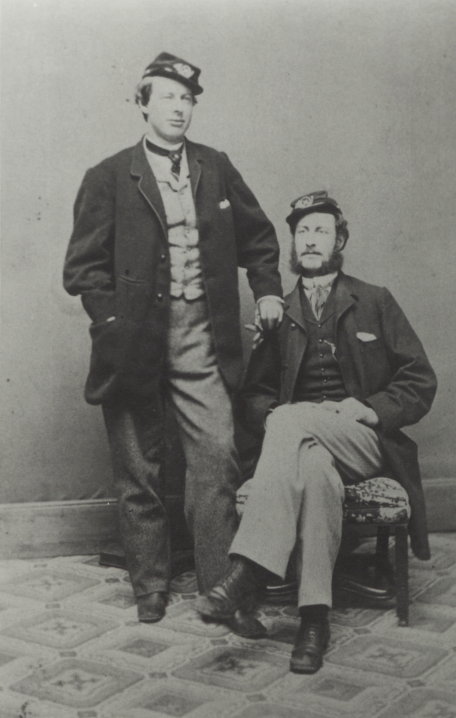
A digital copy of a photograph at the US Army Heritage & Education Center at Carlisle Barracks, PA.
Their description is CWP 100.15: First Lieutenant Daniel Mifflin Brodhead and First Lieutenant George [Keyports] Brady, 14th Regiment, United States Infantry, in military uniforms, Brodhead is standing with his left hand on Brady’s shoulder who is seated with legs crossed.
Lieutenant Brodhead led a Company of the First Battalion, 14th United States Infantry at Antietam on 17 September 1862. Lieutenant Brady was at 2nd Bull Run in August, but not in Maryland in September 1862.
John P Shelton, 13th Massachusetts Infantry (1861)
4 February 2023
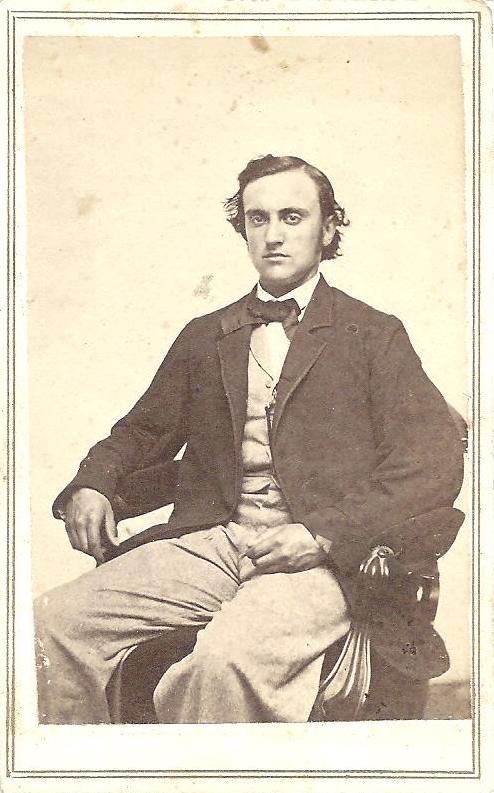
18 year old John Parker Shelton was initially only wounded in the foot at Antietam on 17 September 1862, but while helping another soldier to the rear was hit again, in the spine, and died of his wounds two days later.
… no definite information concerning young Shelton was obtained by his sorrow-stricken family for nearly three weeks after the battle. As soon as the sad tidings were telegraphed, Mr. Simon G. Cheever, – an intimate friend of the family, — started immediately for the battle-field, using every exertion to find him, or learn aught of his situation; issuing descriptive posters and scattering them throughout the region, and making all possible inquiries but to no purpose; no trace of him was learned.
Nothing was ascertained until a letter was received from Surgeon S. G. Palmer, of General Howard’s Division , who wrote from head-quarters, in camp near Harper’s Ferry, Oct. 2 – the battle was Sept. 17th — stating that young Shelton died of his wounds at the hospital on Hoffman’s Farm in the rear of that portion of the battle-field where Sumner’s corps, — to which the Thirteenth Regiment belonged, — was engaged, and where about a thousand of the wounded had been brought; — and that he had been buried in a pleasant spot beneath a walnut tree, by the side of many others, about an eighth of a mile from the farm house; at the same time sending home what few effects were found upon his body.
When these facts were learned, his cousin, Mr. Stephen W. Shelton, and his brother-in-law, Mr. George W. Copeland, at once proceeded to the battle—field and brought his body home.
Notes
This fine photograph is a carte-de-visite from the David Hann collection which he shared on Shelton’s memorial on Find-a-grave.
The quote above is from Elbridge H. Goss’ The Annals of Melrose, County of Middlesex, Massachusetts in the Great Rebellion, 1861-65 (1868).
Captain W.R. Smedberg and family
3 February 2023
Captain William Renwick Smedberg was in command of Company F, First Battalion, 14th United States Infantry in combat at Antietam on 17 September 1862. He was seriously wounded in the Wilderness in 1864 and lost his right foot to amputation, but survived the war and served another 5 years in the US Army afterward.
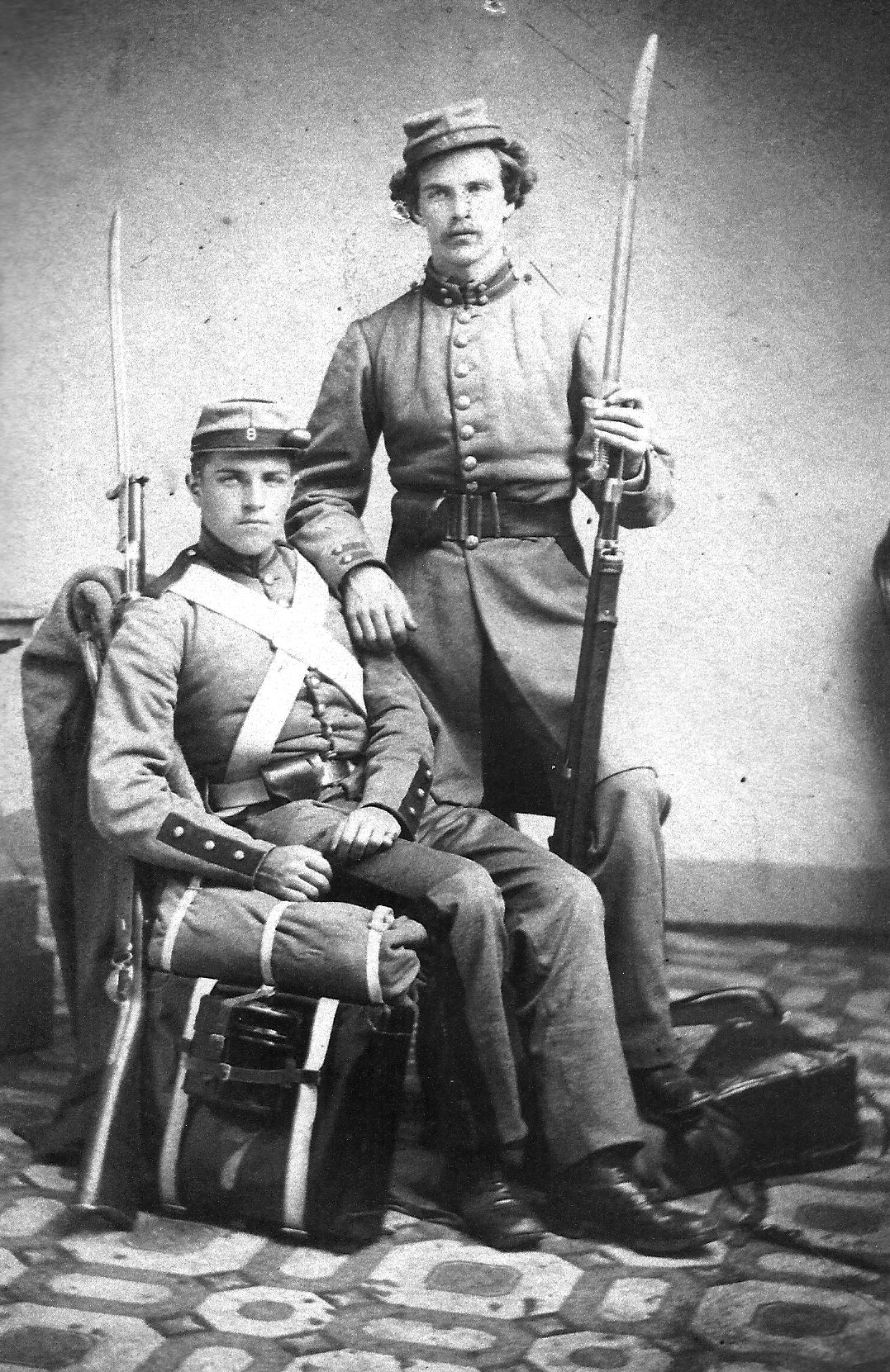
Here are William (standing) and his younger brother Charles Gustavus Smedberg, Jr. (1841-1863), probably photographed in 1861. Charles in the uniform of the 7th New York State Militia, William as a Private in the National Rifles of Washington, DC, before either was commissioned in the Regular Army.
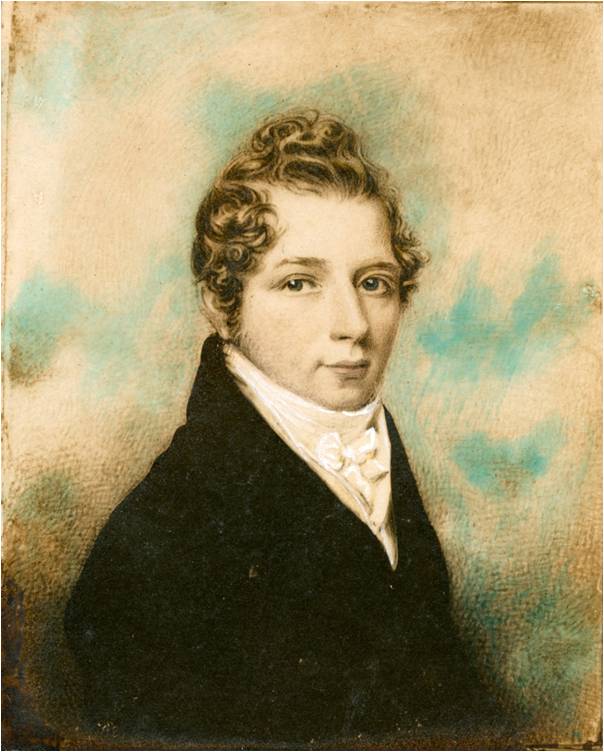
William Renwick and Charles Gustavus Smedberg were the youngest of the 11 children of wealthy New York import-export merchant Charles Gustavus Smedberg (Sweden 1781-1845) and his wife Isabella Renwick (1797-1867). Charles and Isabella are seen here in a pair of 1815 miniature watercolors, probably commissioned on the occasion of their wedding, now at the National Portrait Gallery in Washington.

 [
[